What Are the Symptoms of Menopause? A Body-by-Body Guide

No Author • November 18, 2026

Hot flashes at 2 a.m., a cycle that has gone quiet, a mood that won’t settle: what are the symptoms of menopause, and which ones explain what you’re feeling? This guide is for women in their mid-40s and beyond who want a plain-language answer. You’ll learn which symptoms show up at menopause, which parts of the body they affect, and when to call a provider.


What Does “Menopause” Mean?


Menopause is a single point in time: 12 months in a row with no period, including no spotting, according to the Office on Women’s Health. In the United States, the average age is 52, and the transition usually happens between ages 45 and 55.


Everything before that point is perimenopause, when hormone levels swing and periods turn irregular. Those years have their own pattern, which we break down in our guide to the signs of perimenopause. This guide covers what you feel at menopause and after.


Common Menopause Symptoms by Body System


Estrogen, progesterone, and testosterone act in nearly every system of your body, and their levels fall after menopause. That’s why symptoms rarely stay in one place.


Hot Flashes and Night Sweats


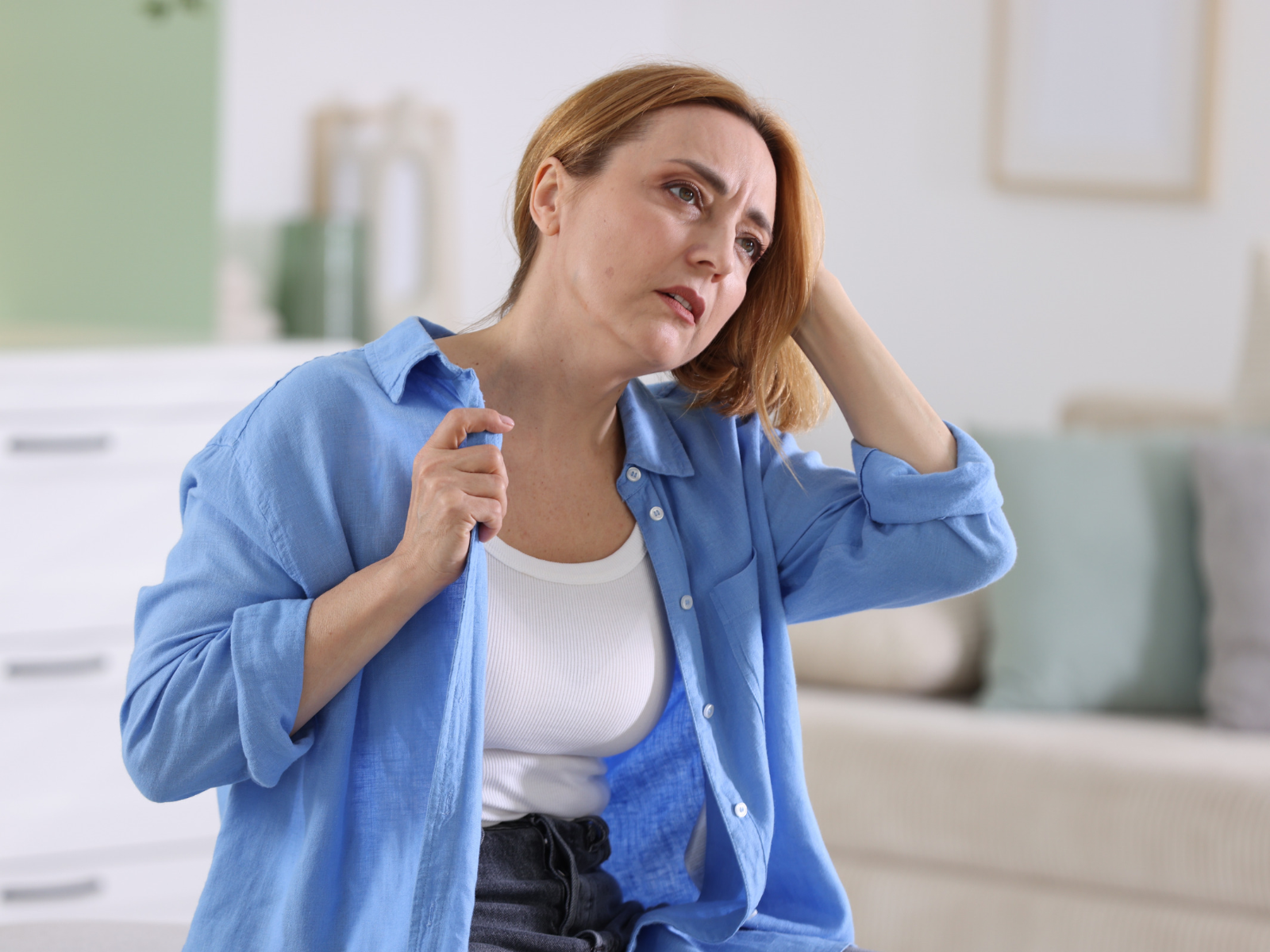
A hot flash is a sudden warm feeling in your face, neck, and chest, and it can bring sweating, as MedlinePlus describes it. When it happens at night, it’s called a night sweat. If these are your main complaints, our post on what helps with hot flashes walks through hot flash treatment options, from clothing layers to prescription care.


Sleep, Mood, and Memory Changes


Sleep trouble can mean falling asleep slowly or not getting back to sleep after you wake. Over time, lost sleep can lead to fatigue and memory problems. Mood changes can include anxiety, irritability, or low mood.


Sleep and mood tend to move together, so tracking both gives your provider a clearer picture.


Vaginal and Urinary Changes


Vaginal dryness can make sex painful or uncomfortable. Bladder issues include loss of bladder control and urinary tract infections (UTIs).


Unlike some other symptoms, these don’t always fade on their own. Without treatment, genital and urinary symptoms, including repeat UTIs, may get worse over time.


Does Menopause Affect Skin, Hair, and Joints?


Yes. Menopause can affect skin, hair, joints, muscles, and weight. Lower estrogen can lead to drier, thinner skin and slower healing, which is one reason skin changes often show up alongside the other symptoms.


Changes You Can’t Feel: Bone Density and Cholesterol


Some effects of menopause don’t announce themselves. Losing estrogen can reduce bone density, which can lead to osteoporosis, and can raise cholesterol, which increases the risk of heart disease and stroke.


Bone density also keeps decreasing after menopause. You can feel fine and still be losing bone, so both belong on your list for your next visit.


Which Symptoms Continue After Your Final Period?


After menopause, some symptoms ease, some stay the same, and some get worse. A symptom list is a starting point, not a verdict. A woman three years past her last period and a woman three months past it can feel very different, and both can be normal.


Timing matters, too. Menopause before age 45 is called early menopause, and before 40 it’s premature menopause. Surgery that removes both ovaries starts menopause right away.


A smiling healthcare worker in blue scrubs speaks with a seated patient in a bright clinical room.

Symptoms That Can Look Like Menopause but Are Not


Several conditions can mimic menopause, so a symptom list alone can’t settle the question. NIH’s NICHD notes that most women recognize menopause from their symptoms without a formal diagnosis. That works well when the picture is clear and less well when it isn’t.


When it isn’t, bloodwork can help rule out other causes. Our direct lab testing lets you order labs on your own, member or not. At Rural Authentic Wellness, we pair your symptoms with trend-based testing instead of one snapshot, because hormone levels shift from day to day.


When to See a Provider About Menopause Symptoms


Vaginal bleeding after menopause is not normal. Call your provider right away if it happens.


Make an appointment, too, when symptoms interfere with your sleep, your work, or your relationships. If your periods stop before age 40, ask about testing. You don’t need to wait for symptoms to become unbearable before help is on the table.


Menopause Treatment Options for Symptom Relief


You may not need treatment. Menopause is a normal part of aging that usually doesn’t require treatment. When symptoms get in the way, you have three options.


Start with lifestyle changes: dress in removable layers, cut back on alcohol, caffeine, and spicy food, keep your bedroom dark, quiet, and cool, and exercise regularly. Non-hormone options include medicines for hot flashes, talk therapy for sleep trouble, and water-based lubricants for vaginal dryness. Hormone therapy, usually estrogen or estrogen plus progestin, is the third route, with benefits and risks your provider should walk you through.


At Rural Authentic Wellness in Olivia, hormone care starts with a thorough assessment, hormone testing, and a care plan built around your symptoms and goals, not a standard protocol. If you’re looking for menopause care in Olivia, that means one conversation, then a plan that fits you.


The Answer Is Longer Than Hot Flashes


The honest answer to “what are the symptoms of menopause” runs well past hot flashes. It reaches your sleep, your mood, your bladder, your skin, and your bones. That’s good news in one way: once you can name what’s happening, you can do something about it.


Start with a note on your phone. Write down your last period date and what you notice each week, then bring it to a provider who’ll treat it as data, not complaints.


Ready to find out which symptoms are yours? Book an appointment with the Rural Authentic Wellness team in Olivia, bring your notes, and we’ll build a plan around what you’re actually feeling.


Frequently Asked Questions


1. How do I know if I need hormone therapy?


It depends on how much your symptoms affect your life, your health history, and your preferences. Hormone therapy can treat hot flashes and vaginal dryness and help prevent osteoporosis, and it carries both benefits and risks. If lifestyle changes aren’t enough, a provider can help you decide whether it’s safe and may recommend the lowest effective dose for the shortest time needed.


2. What lab tests check hormone levels?


A provider can order panels that track estrogen, progesterone, testosterone, LH, and FSH. Blood hormone tests usually aren’t needed to tell whether you’re in perimenopause, since your age, symptoms, and period changes tell most of the story. Labs earn their place when they rule out look-alike conditions or when your picture is unclear.


3. What happens at an initial menopause evaluation?


At Rural Authentic Wellness, the first visit covers a thorough assessment of your symptoms, hormone testing, and a care plan tailored to your goals. Your initial hormone appointment can happen by telehealth as long as the required labs are completed before the visit. Bringing notes on your periods and symptoms makes the conversation faster and more useful.


4. How long do menopause symptoms last?


Hot flashes and night sweats last 7 to 12 years on average, and longer for some women, according to the Office on Women’s Health. Other symptoms can stay the same or get worse after menopause. Because symptoms change over time, it helps to revisit your plan with your provider instead of setting it once.


5. Do I still need birth control as I approach menopause?


Yes, until you’ve reached menopause. During perimenopause, you can still get pregnant, even if you skip periods. Menopause doesn’t protect you from sexually transmitted infections either, so ask your provider what protection still makes sense for you.


Key Takeaways

  • Start a note today with your last period date and your weekly symptoms. 
  • You’ve reached menopause after 12 months with no period, spotting included.
  • Call your provider right away about any vaginal bleeding after menopause.
  • Ask about bone density and cholesterol at your next visit, because estrogen loss affects both without obvious warning signs.
  • Try layers, a cool, dark, quiet bedroom, and less alcohol, caffeine, and spicy food before reaching for anything else for nighttime hot flashes.
  • Check with your provider before starting a supplement or herbal product for symptoms, since some cause side effects or interact with medicines.


Relevant Posts

A pink piggy bank sits beside a black stethoscope on a teal surface, combining healthcare and savings themes.
By No Author • November 11, 2026
How does DPC save money? See how a flat monthly membership changes what you pay for primary care and labs, then book a meet-and-greet in Olivia, MN.
A healthcare provider   talks with a smiling patient in a bright medical office
By No Author • November 4, 2026
DPC vs. concierge medicine: how insurance, cost, and access compare for patients in Olivia, MN. Book a free meet-and-greet.
A person in a light beige coat gestures while looking back on a narrow city street lined with stone buildings.
By No Author • October 28, 2026
Is HRT safe for women over 50? See what FDA and NIH sources say about timing, risks, and who should skip HRT, then talk it through in Olivia, MN.
Blue-gloved hands hold a rack of blood sample tubes to take before weightloss program
By No Author • October 21, 2026
What labs should I get before starting a weight loss program? See the common baseline tests, then book with RAW DPC in Olivia, MN.
Four people in business attire discuss documents around a table in a meeting room.
By No Author • October 7, 2026
What’s the real ROI of direct primary care for employers? See where the savings show up, then request an employer consultation in West Central Minnesota.
Two medication vials on a countertop, labeled semaglutide with blue cap and tirzepatide with purple cap.
By No Author • October 2, 2026
Semaglutide vs. tirzepatide for weight loss? Compare how they work and who may be a candidate, then book a weight management consultation with RAW.
Nurse in navy scrubs talking with a man in a gray shirt at a clinic desk
By No Author • September 23, 2026
What is direct primary care? Learn how the model works, what it costs, and how it differs from insurance, then book a free meet-and-greet with RAW.
Person measuring their waist with a tape measure over a pink top and black pants.
By No Author • September 16, 2026
How much weight can you lose with semaglutide? See what clinical research shows about results and timelines, then book a consultation with RAW in Olivia, MN.
Dentist model on desk with stethoscope and test tubes of red liquid in a lab setting
By No Author • September 9, 2026
Wondering what lab tests check your thyroid function? Learn what TSH, T4, and T3 tests measure, then book a thyroid panel in Olivia, MN.
Show More